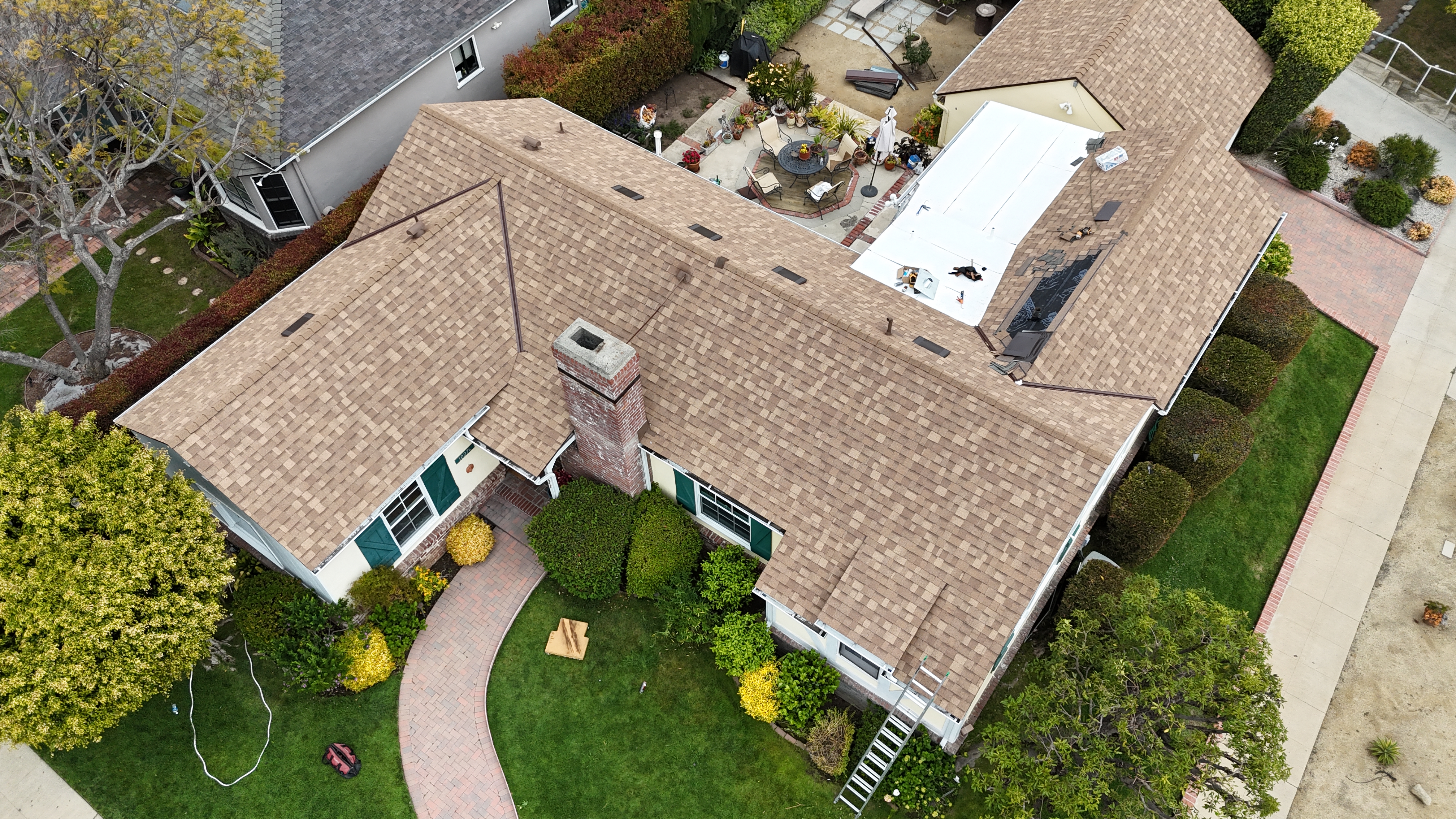
A strong, well-installed roof is one of the most important investments you can make in your home. It protects your family from changing weather, helps prevent moisture intrusion, and contributes to the property’s overall appearance and value. However, when a roof becomes outdated, develops recurring problems, or reaches the end of its useful life, repairs alone may no longer provide the long-term solution you need. Therefore, choosing a reliable new roof installation service in Los Angeles, CA can help you protect your property and plan confidently for the future.
Los Angeles homes feature a wide variety of architectural styles, roof designs, and construction materials. Consequently, every roofing project requires careful consideration of the property’s structure, drainage needs, ventilation, and preferred roofing materials. Moreover, the city’s sunny conditions, seasonal rainfall, and occasional strong winds make proper installation particularly important.
Family Roofing understands the importance of making informed roofing decisions. Whether you are planning a roof installation for a newly constructed home or considering an upgrade to an existing property, understanding the process can help you set realistic expectations and avoid common mistakes.
In this guide, you will discover the benefits of professional roof installation, the materials homeowners can consider, the installation process, cost factors, maintenance tips, and the questions worth asking before starting your roofing project.
Why Invest in a New Roof Installation Service in Los Angeles, CA?
A new roof does more than cover the top of your home. When properly selected and installed, it can improve weather protection, address existing roofing concerns, and give the property a refreshed appearance. Furthermore, a professionally planned installation helps homeowners address problems that might otherwise continue with an aging roofing system.
Improve Protection Against Weather
First, a roof acts as a barrier between your home and outdoor conditions. Over time, however, roofing materials may deteriorate, flashing can become damaged, and water may enter through vulnerable areas.
Consequently, installing a new roofing system can help address widespread deterioration that smaller repairs cannot adequately resolve. The exact benefits depend on the materials selected, the condition of the roof deck, and the quality of installation.
Enhance Your Home’s Appearance
Your roof occupies a substantial portion of your home’s exterior. Therefore, its color, texture, and design can influence the property’s overall appearance.
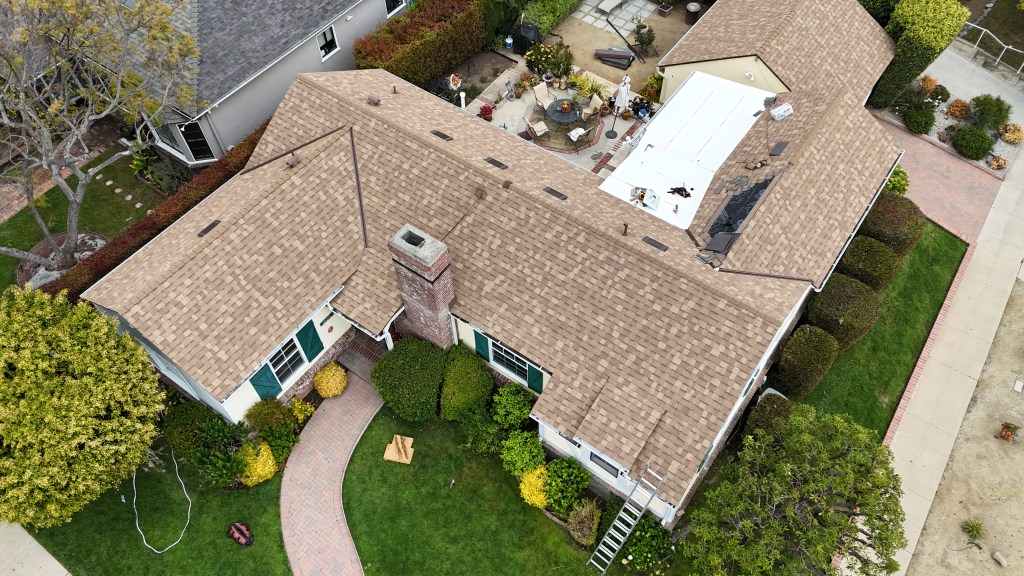
For example, architectural shingles may complement traditional residential designs, while certain tile roofing styles may suit homes with Spanish or Mediterranean-inspired architecture. Additionally, selecting materials that coordinate with exterior paint, siding, and landscaping can create a more consistent look.
Address Recurring Roofing Problems
Repeated leaks, damaged shingles, deteriorating flashing, and persistent moisture problems can become frustrating for homeowners. Although some issues can be corrected through targeted repairs, widespread deterioration may indicate that replacement deserves consideration.
Instead of continuing to address isolated symptoms, a professional assessment can help determine whether a new installation is a more practical long-term option. Family Roofing also offers roof repair services in Los Angeles, CA for homeowners who need to evaluate repair options before deciding on a complete replacement.
Support Long-Term Property Planning
A new roof can be an important part of maintaining a home over time. Moreover, a documented installation and maintenance history can help future buyers understand the condition of the roofing system.
Nevertheless, a new roof does not automatically guarantee a specific increase in resale value. Actual results depend on the property’s condition, neighborhood, materials, workmanship, and market conditions.
Signs Your Los Angeles Home May Need a New Roof
Determining whether to repair or replace a roof requires more than looking at its age. Although roofing materials have different expected service lives, their actual condition also depends on installation quality, maintenance, weather exposure, and ventilation.
Watch for the following warning signs.
- Recurring leaks: Water repeatedly enters the home despite previous repair attempts.
- Widespread shingle damage: Numerous shingles are cracked, missing, curled, or deteriorating.
- Visible roof sagging: Sections of the roof appear uneven or may indicate a structural concern.
- Damaged flashing: Vulnerable joints around chimneys, vents, or roof intersections show deterioration.
- Persistent moisture problems: Water stains, damp insulation, or recurring interior damage suggest an unresolved roofing issue.
- Widespread material deterioration: Several areas show damage rather than one isolated problem.
- Roofing near the end of its expected service life: The existing system has aged significantly and requires more frequent attention.
However, no single sign automatically means that the entire roof must be replaced. Therefore, arrange a professional inspection to identify the cause of the problem and compare the available solutions.
Choosing the Right Roofing Material for Your Home
Selecting roofing materials is one of the most important decisions during a new installation. Different materials offer different appearances, maintenance requirements, installation methods, and performance characteristics.
Furthermore, the best option depends on the roof’s slope, the building’s structural capacity, local requirements, and your budget.
Asphalt Shingles
Asphalt shingles remain a familiar choice for many residential properties. They are available in different colors and styles, making it easier to coordinate the roof with the home’s exterior.
Additionally, some shingle systems can provide a practical balance between initial cost, appearance, and maintenance needs. However, performance and expected service life vary according to the product, installation quality, ventilation, and exposure conditions.
Tile Roofing
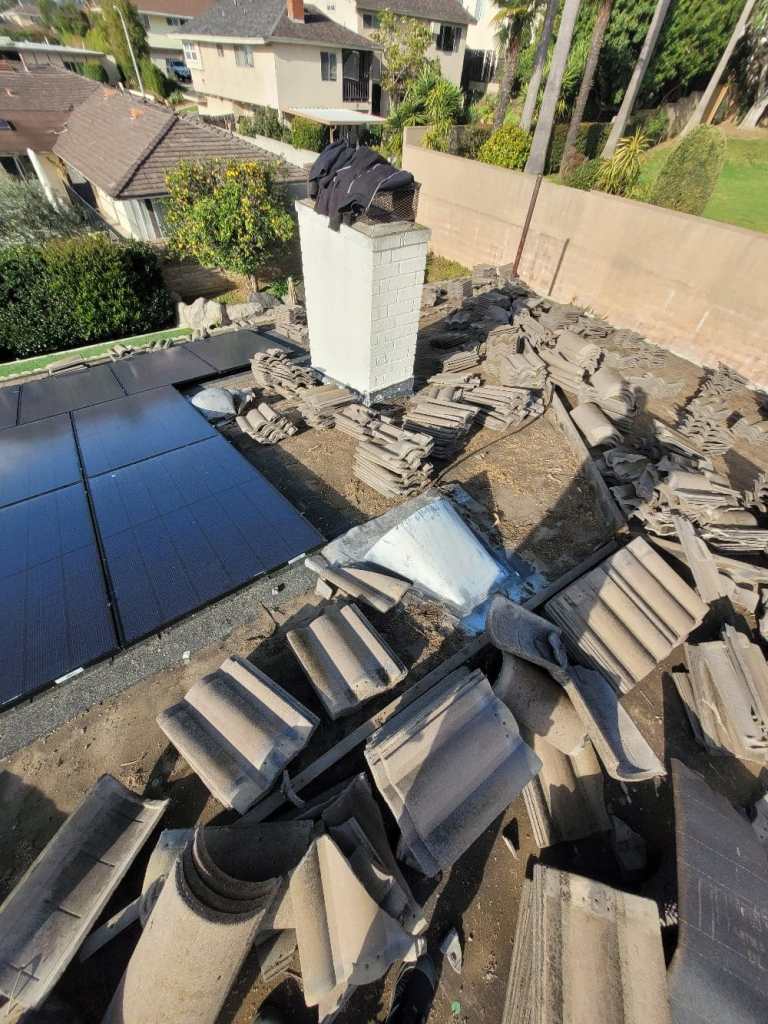
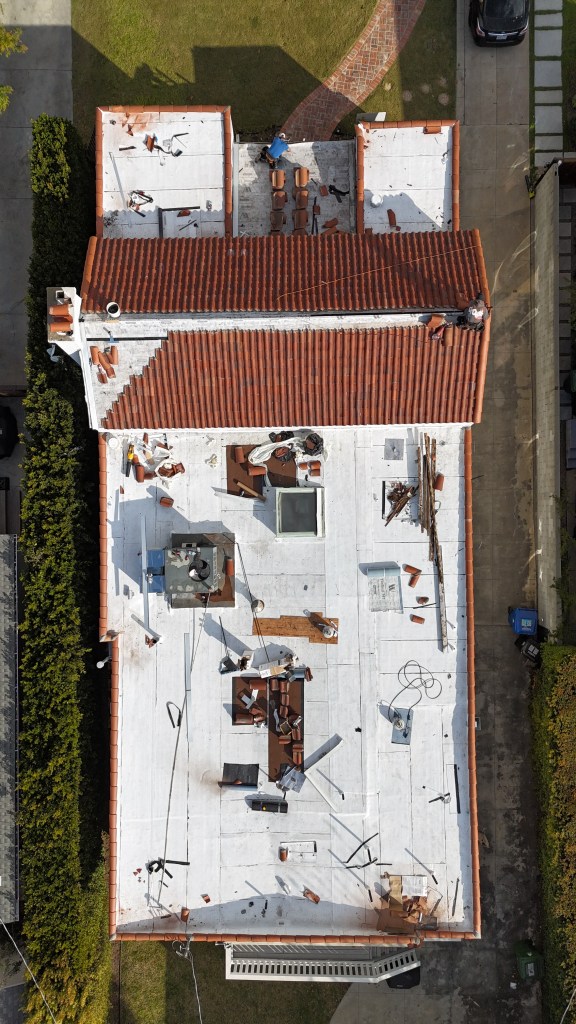
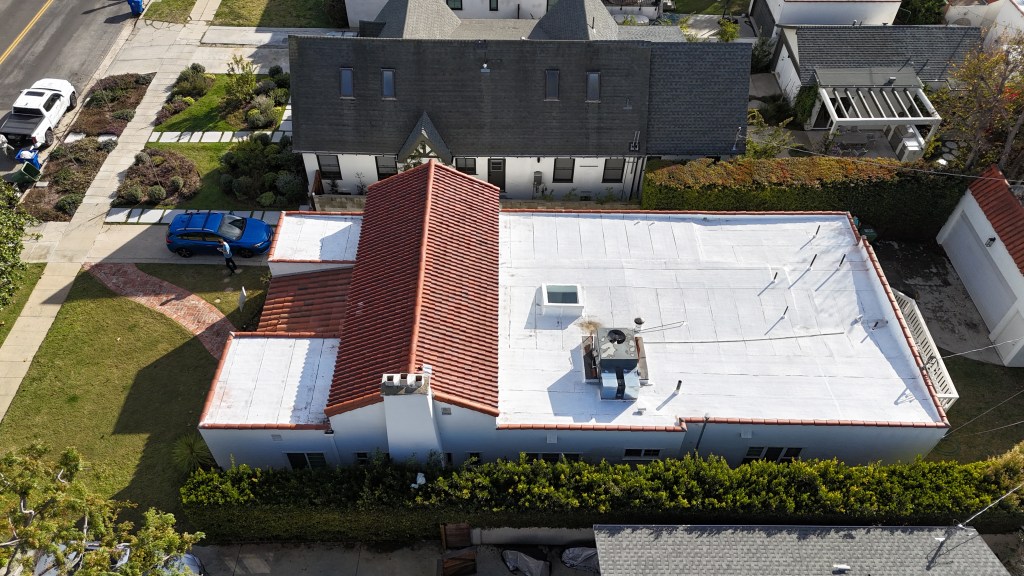
Tile roofing can complement many Southern California architectural styles. Depending on the product, tile may be made from clay or concrete and can provide a distinctive appearance.
However, tile roofing can be heavy. Consequently, the roof structure must be suitable for the selected material, and installation should follow the manufacturer’s requirements. In addition, broken tiles and underlayment deterioration may require attention over time.
Metal Roofing
Metal roofing is another option for homeowners considering a new roofing system. Depending on the product and design, it can offer a clean appearance, relatively low routine maintenance, and long-term performance.
Nevertheless, homeowners should compare the initial investment, roof design, installation details, noise considerations, and compatibility with the building. Proper fastening, flashing, and material selection remain essential.
Flat and Low-Slope Roofing Systems
Some Los Angeles homes feature flat or low-slope roof sections. These designs require particular attention to drainage, seams, flashing, and waterproofing details.
Unlike steeper roofs that shed water more quickly, low-slope systems depend heavily on appropriate drainage and correctly installed roofing membranes or other approved materials. Therefore, choosing a system specifically suited to the roof’s slope is essential.
Roofing Material Comparison Table
The following table provides a general overview of common residential roofing options. Actual performance depends on the specific product and installation.
| Roofing material | Common advantages | Important considerations |
| Asphalt shingles | Variety of colors, familiar appearance, multiple product options | Product quality, ventilation, and wind resistance ratings |
| Clay or concrete tile | Distinctive appearance and potentially long service life | Structural capacity, weight, and underlayment condition |
| Metal roofing | Multiple styles and potential durability benefits | Initial cost, fastening details, and installation requirements |
| Flat-roof membrane systems | Designed for appropriate low-slope applications | Drainage, seams, flashing, and waterproofing |
| Other approved roofing systems | Can suit specific architectural or performance needs | Product compatibility, local requirements, and maintenance |
Ultimately, compare complete roofing systems rather than choosing a material based only on appearance. A suitable product must work with the roof structure, drainage design, and installation requirements.
What Happens During a New Roof Installation?
Understanding the installation process helps homeowners prepare for the work and know what to expect. Although the exact sequence varies by property, a properly planned roofing project generally follows several stages.
Step 1: Initial Inspection and Project Assessment
First, the roofing contractor evaluates the existing roof or the structure prepared for a new installation. This assessment helps identify the roof’s dimensions, slope, access requirements, existing damage, and other project-specific considerations.
Additionally, the contractor can discuss material preferences, the estimated scope of work, and any visible concerns that may affect the project.
Step 2: Material Selection and Planning
Next, the homeowner and contractor establish the roofing system, material specifications, project scope, and installation plan.
At this stage, it is important to discuss ventilation, flashing, drainage, underlayment, and any necessary structural work. Furthermore, the contractor should clarify the expected timeline and explain how unexpected damage will be handled.
Homeowners can explore Family Roofing’s roofing services to learn more about the company’s service offerings.
Step 3: Permits and Preparation
Before installation begins, determine which permits and inspections are required for the specific property and project. Requirements depend on the scope of work and applicable local regulations.
Meanwhile, homeowners should prepare the surrounding area by moving vehicles, protecting fragile outdoor items, and keeping access routes clear. Roofing work can involve noise, falling debris, and deliveries, so advance planning helps reduce disruption.
Step 4: Removal of Existing Materials, When Necessary
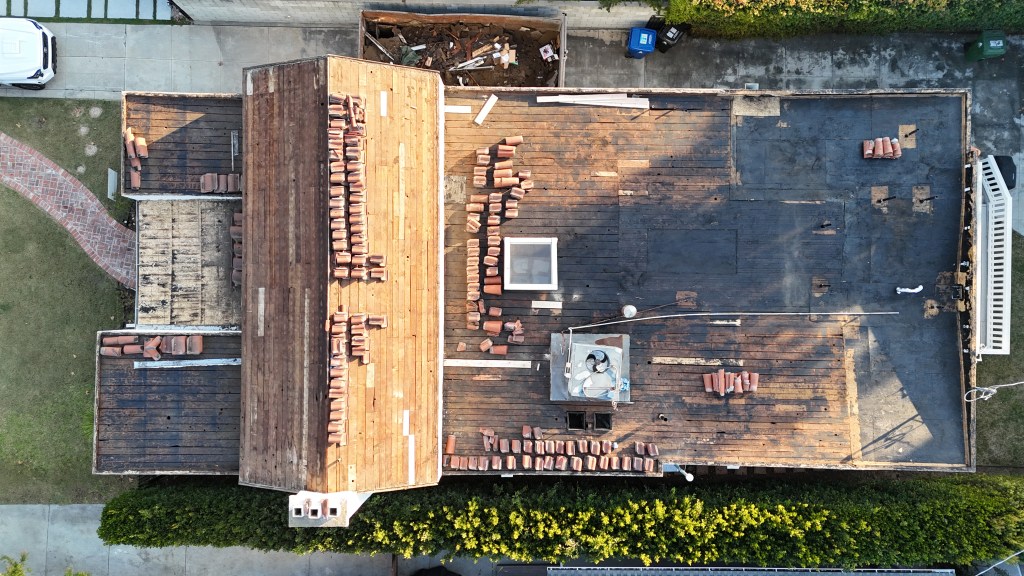
For a replacement project, the existing roofing materials may need to be removed to expose the underlying structure.
Afterward, the roof deck can be inspected for visible deterioration or damage. If repairs are necessary, the contractor should explain the findings and discuss any resulting changes to the work or estimate.
For new construction, the process may differ because the roof deck and supporting structure are prepared as part of the building project.
Step 5: Underlayment, Flashing, and Roofing Installation
Once the underlying surface is ready, the installation team places the required underlayment and flashing according to the selected roofing system.
These components are especially important around roof edges, valleys, chimneys, vents, and other transitions. Therefore, they should not be treated as minor details simply because they may be less visible than the finished roofing material.
The main roofing material is then installed according to the manufacturer’s specifications and applicable requirements.
Step 6: Final Inspection and Cleanup
Finally, the contractor checks the completed work, addresses identified issues, and removes project debris according to the agreed scope.
Homeowners should ask about final documentation, workmanship coverage, manufacturer warranties, and any maintenance recommendations. In addition, confirm that any required inspections have been completed and that the site has been left in an appropriate condition.
How Much Does New Roof Installation Cost in Los Angeles?
The cost of a new roof installation varies considerably from one property to another. Therefore, a reliable estimate should reflect the actual roof dimensions, selected materials, installation requirements, and condition of the existing structure.
Several factors may affect the total project cost.
- Roof size: Larger roofs generally require more materials and labor.
- Roof design: Complex slopes, valleys, and architectural features can increase installation time.
- Material selection: Different roofing products have different material and installation costs.
- Existing roof removal: Removing and disposing of old roofing materials may add to the project.
- Roof deck repairs: Damaged decking or structural components may require additional work.
- Flashing and ventilation: Necessary improvements can affect the overall scope and cost.
- Access and property layout: Difficult access, steep slopes, and special equipment requirements may influence labor.
- Permits and inspections: Applicable fees and project requirements should be included in the planning process.
The table below compares project characteristics rather than providing fixed prices.
| Project characteristic | Potential cost impact | What homeowners should ask |
| Simple roof design | May involve fewer installation complications | Which materials and labor are included? |
| Complex roof geometry | May require additional labor and detailing | Are valleys, flashing, and transitions included? |
| Premium roofing materials | May increase material and installation costs | What are the product specifications and warranty terms? |
| Damaged roof decking | May require repairs before installation | How will additional damage be documented and priced? |
| Existing roof removal | May add labor and disposal costs | Is removal and disposal included in the estimate? |
| Ventilation or flashing upgrades | May add necessary work to the project | Which improvements are recommended and why? |
For a clearer comparison, request a written estimate that separates the main roofing work from any optional improvements or potential additional repairs. Furthermore, compare the scope of work across estimates instead of looking only at the final number.
Why Proper Roof Ventilation and Flashing Matter
A new roof is only as effective as the complete system supporting it. Although shingles, tiles, or metal panels provide the visible exterior, ventilation and flashing help address important performance concerns.
Roof Ventilation
Appropriate ventilation helps manage heat and moisture within suitable roof and attic assemblies. However, the correct design depends on the building, insulation, existing ventilation, and applicable requirements.
Consequently, homeowners should ask whether the existing ventilation system is appropriate for the new roof and whether improvements are necessary.
Flashing and Waterproofing Details
Flashing helps protect vulnerable transitions where water may otherwise enter. These areas include roof penetrations, chimneys, valleys, and certain wall intersections.
Moreover, poor installation around these locations can lead to leaks even when the main roofing material appears to be in good condition. Therefore, careful detailing is essential during installation and final inspection.
How to Prepare for Roof Installation Day
A little preparation can make roofing work more manageable. Since installation involves equipment, materials, and activity around the home, homeowners should plan ahead.
Move vehicles away from the work area. This can provide space for deliveries and help protect vehicles from falling debris.
Protect outdoor belongings. Move patio furniture, garden decorations, and other fragile items away from areas where work will take place.
Secure items in the attic. Dust and vibration may affect stored belongings during certain projects.
Plan for noise. Roofing work can be loud, so consider arranging work or study activities accordingly.
Keep children and pets away from the work zone. Roofing materials and equipment can create hazards.
Confirm communication arrangements. Ask who will provide updates and how unexpected repairs or schedule changes will be discussed.
Furthermore, clarify how the contractor plans to protect landscaping, manage debris, and maintain safe access throughout the project.

Maintaining Your New Roof After Installation
Once the installation is complete, regular maintenance can help you identify developing issues before they cause extensive damage.
First, arrange periodic visual inspections appropriate to the roofing system. Additionally, check for visible signs of damaged flashing, displaced materials, or debris accumulation when it is safe to do so.
Second, keep gutters and drainage paths clear where applicable. Poor drainage can allow water to collect in areas that should remain clear.
Third, pay attention to interior warning signs. Water stains, peeling paint, damp odors, and unexpected moisture may indicate a problem that deserves professional attention.
Fourth, address small concerns promptly. Although not every issue requires major repairs, delaying necessary maintenance may allow damage to spread.
Finally, keep records of installation details, warranty documents, inspections, and repairs. This information can be useful when scheduling future maintenance or discussing concerns with a roofing professional.
If a problem develops after installation, professional roof repair services in Los Angeles can be a starting point for understanding the available repair options.
Is Roof Replacement Better Than Repair?
The right decision depends on the condition of the existing roofing system. In some cases, a localized repair can address the problem effectively. However, widespread deterioration or recurring failures may justify a broader replacement project.
Consider the following general comparison.
| Situation | Repair may be appropriate when | Replacement may be worth considering when |
| Missing or damaged shingles | Damage is limited to a small area | Deterioration is widespread |
| Roof leaks | The cause is isolated and repairable | Leaks recur across multiple areas |
| Aging materials | The roof remains in generally good condition | The system has reached the end of its useful life |
| Damaged flashing | The affected area can be repaired reliably | Multiple components have deteriorated |
| Previous repairs | The original issue has a clear, limited cause | Repeated repairs have not resolved the underlying problems |
Nevertheless, age alone should not determine the decision. A qualified inspection can help establish whether the roof’s remaining condition supports further repairs or whether replacement is the more practical option.
For homeowners considering a complete upgrade, Family Roofing provides information about roof replacement services.
Frequently Asked Questions About New Roof Installation in Los Angeles, CA
1. How long does a new roof installation take?
The timeline depends on the roof’s size, design, material, weather conditions, and the amount of preparation required. A straightforward project may take less time than a complex roof or one that needs structural repairs. Ask your contractor for a schedule based on your specific property.
2. What is the best roofing material for a Los Angeles home?
There is no single best material for every home. Asphalt shingles, tile, metal, and suitable low-slope systems each have different advantages and requirements. The right choice depends on the building design, budget, structural capacity, and desired performance.
3. Do I need a permit for a new roof installation in Los Angeles?
Permit requirements depend on the type and scope of the project and applicable local regulations. Before work begins, ask your contractor which permits and inspections are required for your property.
4. Should I replace my roof or repair it?
If damage is limited and the roofing system remains in good condition, repair may be sufficient. However, extensive deterioration, recurring leaks, or widespread material failure may make replacement more practical. A professional inspection can help you compare both options.
5. How can I compare roofing installation estimates?
Compare material specifications, labor, removal and disposal, flashing, underlayment, ventilation, permits, cleanup, and warranty terms. Furthermore, make sure each estimate covers a comparable scope of work before selecting a contractor.
6. Does a new roof increase home value?
A new roof can improve a property’s appearance and address concerns about an aging roofing system. However, any effect on resale value depends on market conditions, workmanship, material selection, and the property’s overall condition.
7. How do I know whether my roof has ventilation problems?
Potential warning signs may include persistent attic moisture, condensation, or other moisture-related concerns. However, these symptoms can have multiple causes. A qualified roofing professional can evaluate whether ventilation improvements are appropriate.
8. What should I do before installation begins?
Move vehicles and fragile outdoor belongings away from the work area, secure attic storage where appropriate, and discuss access, noise, debris management, and scheduling with your contractor. Also, confirm the project scope and how additional repairs will be approved.
9. Does Family Roofing offer roof repair services as well as installation?
Family Roofing has a dedicated service page for roof repair in Los Angeles, CA. Homeowners can review the company’s roof repair service information to explore repair-related options.
10. How can I request a new roof installation estimate?
Start by describing your property, current roofing condition, preferred materials, and any known problems. Then, contact Family Roofing to discuss the project and ask about the inspection and estimate process through its roofing service contact page.
Plan Your New Roof Installation With Family Roofing
Installing a new roof is an important decision that deserves careful planning. From choosing appropriate materials to evaluating ventilation, flashing, drainage, and structural conditions, every stage can affect the final result.
Therefore, begin with an assessment of your existing roof or new construction project. Next, compare suitable roofing systems and request a detailed estimate that explains the work, materials, and potential additional costs. Finally, make sure the installation plan addresses the property’s specific requirements rather than relying on a one-size-fits-all solution.
Family Roofing provides roofing service information for homeowners considering repairs, replacement, and other roofing needs. Moreover, reviewing the available services can help you prepare better questions before beginning a project.
To take the next step, visit Family Roofing’s official website or contact the team about your roofing project. You can also review the company’s fall promotion information and confirm its current terms, eligibility, and availability directly with the company.
Protect your home with a roofing plan built around the property’s needs, suitable materials, and professional installation.
SEO Details
SEO Title: New Roof Installation Service in Los Angeles, CA | Family Roofing
Meta Description: Looking for a new roof installation service in Los Angeles, CA? Learn about roofing materials, installation steps, cost factors, roof replacement, and maintenance with Family Roofing.
URL Slug: new-roof-installation-service-los-angeles-ca
Primary Keyword: New Roof Installation service in Los Angeles CA
Secondary Keywords: New roof installation Los Angeles, residential roofing Los Angeles CA, roof replacement Los Angeles, professional roofing contractor Los Angeles, asphalt shingle installation, tile roof installation, metal roofing installation, roof repair services Los Angeles, residential roof installation, roofing estimate Los Angeles.


You must be logged in to post a comment.