
A reliable roof is one of the most important parts of any home. It protects your family, supports the building’s structure, and helps keep the interior comfortable throughout changing weather conditions. However, even a well-maintained roof eventually reaches a point when repairs are no longer the most practical solution. Therefore, choosing a top rated roof replacement company in Los Angeles, CA, can help homeowners protect their property and make a confident investment in its future.
In Los Angeles, roofs face a combination of strong sunlight, seasonal rain, temperature changes, and occasional wind damage. Over time, these conditions can weaken roofing materials, damage flashing, and create openings that allow water to enter. Furthermore, an aging roof may develop recurring leaks even when individual repairs temporarily resolve the visible symptoms.
Family Roofing helps homeowners explore roofing solutions based on their property’s condition and needs. Whether your roof has reached the end of its useful life, sustained widespread damage, or requires frequent repairs, a professional evaluation can help determine the appropriate next step.
Although roof replacement represents a significant investment, it can provide long-term benefits when the work is properly planned and completed. Moreover, selecting suitable materials, understanding the installation process, and working with an experienced roofing contractor can help reduce uncertainty throughout the project.
If you are considering a roofing upgrade, understanding the signs, costs, material choices, and replacement process will help you make a more informed decision.
Why Choose a Top Rated Roof Replacement Company in Los Angeles, CA?
Roof replacement involves much more than removing old shingles and installing new materials. Instead, it requires careful planning, an assessment of the existing roof structure, proper installation techniques, and attention to ventilation and water management.
Consequently, selecting a qualified roofing company is essential to achieving a durable result.
A professional roofing contractor should explain the roof’s condition, identify visible concerns, discuss suitable materials, and provide a clear estimate before work begins. In addition, the contractor should communicate the project timeline and explain what the replacement will involve.
Here are several reasons homeowners should prioritize quality when choosing a roof replacement company.
- Improved weather protection: A properly installed roof helps protect the home against rain, wind, and other environmental conditions.
- Fewer recurring roofing problems: Replacing an extensively deteriorated roof can address widespread issues that individual repairs may not resolve.
- Better energy performance: Suitable roofing materials, ventilation, and insulation can contribute to improved indoor comfort and energy efficiency.
- Enhanced curb appeal: A new roof can refresh the property’s exterior and complement its architectural style.
- Potential resale advantages: A well-documented roof replacement may reassure prospective buyers about the condition of a major building component.
- Greater peace of mind: Understanding the materials, installation process, and warranty terms can help homeowners feel more confident about their investment.
Nevertheless, roof replacement is not automatically necessary whenever a leak appears. In some situations, a targeted repair may be sufficient. Therefore, a professional assessment should determine whether the roof needs localized repairs or a more comprehensive replacement.
Homeowners can explore Family Roofing’s residential roofing services and available roofing solutions to learn more about the types of work to discuss with a roofing professional.
Signs Your Los Angeles Home May Need Roof Replacement
Roofing problems often develop gradually. However, once the materials begin deteriorating across multiple areas, the roof may become less reliable and more expensive to maintain.
Recognizing early warning signs can help you plan ahead instead of waiting for a major leak or emergency.
1. Frequent Roof Leaks
A leak that returns after several repairs may indicate a larger problem. For example, water could be entering through deteriorated roofing materials, damaged flashing, or multiple vulnerable areas.
Furthermore, moisture can travel along roof decking and framing before appearing on an interior ceiling. Consequently, the visible stain may not be directly beneath the original entry point.
If your roof requires repeated attention, arrange a professional assessment to determine whether continued repairs remain practical. Family Roofing provides information about roof repair services in Los Angeles, CA for homeowners dealing with roofing damage.
2. Aging or Deteriorating Roofing Materials
Every roofing material has an expected service life, although actual performance depends on installation quality, maintenance, climate, and exposure.
For example, asphalt shingles may become brittle, lose protective granules, curl, or crack as they age. Similarly, other roofing systems may develop worn surfaces, failing seams, or deteriorated waterproofing components.
Therefore, homeowners should consider both the roof’s age and its current condition rather than relying on age alone.
3. Missing, Loose, or Damaged Shingles
Strong winds and prolonged weather exposure can damage roofing materials. Although a few damaged shingles may be repairable, widespread deterioration can indicate that the roofing system needs more extensive work.
Additionally, missing shingles can expose underlying components to moisture. As a result, prompt assessment may help prevent further damage.
4. Sagging Areas or Visible Structural Concerns
A sagging roofline should never be ignored. It may indicate problems involving roof decking, framing, prolonged moisture exposure, or other structural components.
Consequently, seek a qualified professional assessment promptly. If there are signs of structural instability, avoid entering the affected area and obtain appropriate assistance.
5. Rising Repair Expenses
Individual repairs can be sensible when the roof remains in good condition. However, repeated repair costs can accumulate when a roof is approaching the end of its useful life.
For that reason, compare the cost of continued repairs with the projected cost and benefits of replacement. A written assessment can help you understand the condition of the existing roof and the options available.

Roof Repair vs. Roof Replacement: Which Option Is Better?
Homeowners often wonder whether they should repair a damaged roof or replace it entirely. The answer depends on the extent of the damage, the roof’s age, the condition of the underlying structure, and the cost of the proposed work.
In addition, the same symptom can have different causes. For instance, a leak near a chimney might result from a flashing problem rather than widespread roofing failure.
The following table highlights important differences between the two options.
| Consideration | Roof repair | Roof replacement |
| Typical purpose | Address a specific damaged area | Renew an aging or extensively deteriorated roofing system |
| Scope of work | Usually limited to a particular issue | Generally involves removing and replacing a larger portion or the entire roof |
| Initial investment | Often lower for isolated damage | Usually higher because of the broader scope |
| Best suited for | Localized damage on an otherwise serviceable roof | Widespread deterioration or recurring problems |
| Long-term considerations | Other aging areas may require attention later | Can provide a new roofing system when properly installed |
| Project duration | Often shorter for straightforward repairs | Depends on roof size, material, weather, and underlying conditions |
For example, if a relatively new roof has a small area of wind damage, a repair may be the most appropriate option. Conversely, if the roof is aging and has widespread shingle deterioration, replacement may offer better long-term value.
Ultimately, the right decision should be based on the roof’s actual condition rather than a one-size-fits-all rule.
Popular Roof Replacement Materials for Los Angeles Homes
Selecting the right roofing material is an important part of planning a replacement. However, the best option depends on the home’s architecture, roof slope, structural capacity, budget, maintenance expectations, and local requirements.
Moreover, homeowners should consider how a material performs under sunlight and seasonal weather conditions.
Asphalt Shingles
Asphalt shingles remain a familiar option for many residential properties. They are available in different styles and colors, making it easier to coordinate the roof with the home’s exterior.
Additionally, many asphalt shingle systems offer a practical balance between upfront cost and appearance. Nevertheless, their performance depends on product quality, correct installation, ventilation, and ongoing maintenance.
Tile Roofing
Tile roofing can complement many Southern California architectural styles. Depending on the product, tile may offer durability and resistance to many common weather conditions.
However, tile roofing can be heavy, so the structure must be suitable for the selected system. Furthermore, broken tiles, underlayment deterioration, and flashing problems may require professional attention.
Metal Roofing
Metal roofing is another option for homeowners seeking a different appearance and performance profile. Depending on the specific system, it may offer durability, reflective properties, and a relatively low-maintenance surface.
However, installation details, roof design, material selection, and local building requirements must all be considered. Therefore, compare product specifications and warranties before choosing a system.
Flat and Low-Slope Roofing
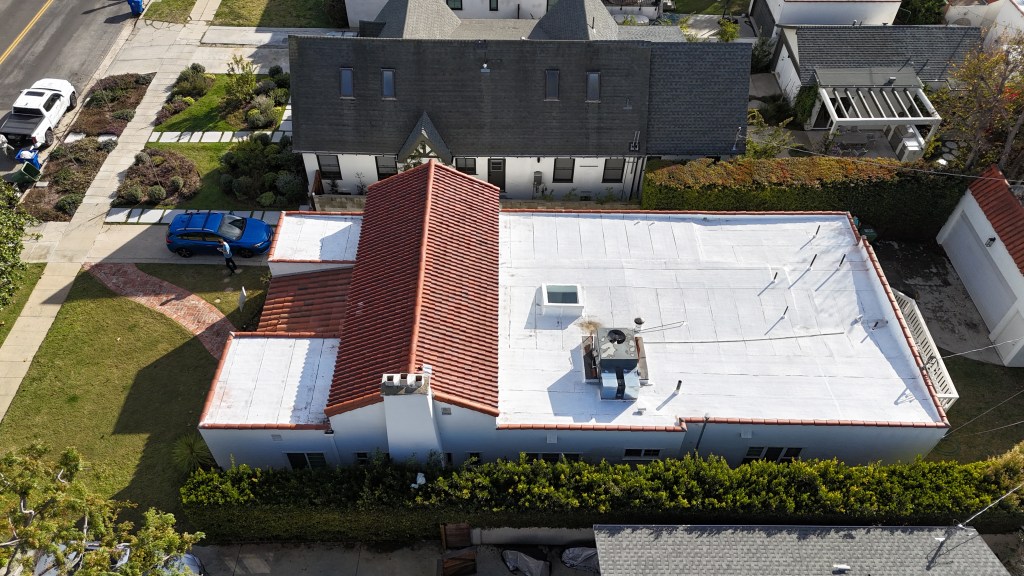
Some Los Angeles homes and buildings have flat or low-slope roofs. These systems require suitable waterproofing materials, drainage design, and carefully installed seams and penetrations.
Consequently, replacement planning should account for standing-water risks, drainage conditions, and the building’s specific roof design.
| Roofing material | Potential advantages | Important considerations |
| Asphalt shingles | Multiple styles and price points | Service life varies by product and conditions |
| Tile | Distinctive appearance and durable roofing surface | Weight, underlayment, and installation requirements |
| Metal | Durable options and varied designs | System compatibility, detailing, and initial cost |
| Flat-roof membrane | Designed for low-slope waterproofing applications | Drainage, seams, penetrations, and maintenance |
Rather than choosing a material based on appearance alone, discuss your priorities with a roofing professional. In addition, confirm that the selected product meets applicable local building requirements and is suitable for the existing structure.
The Roof Replacement Process: What Homeowners Should Expect
Understanding the installation process can make a roof replacement less stressful. Although the exact steps vary by roofing system and property, a properly managed project generally follows a clear sequence.
Step 1: Roof Inspection and Assessment
First, the contractor evaluates the roof’s condition, including visible damage, flashing, drainage, and accessible structural components.
Furthermore, the assessment should identify areas where water may be entering and determine whether the existing roof can support the proposed replacement system.
Step 2: Material Selection and Written Estimate
Next, the homeowner and contractor discuss roofing materials, colors, project scope, and the expected timeline.
The written estimate should explain the proposed work, material specifications, removal requirements, and any anticipated additional costs. Moreover, it should clarify whether underlayment, flashing, ventilation improvements, and disposal are included.
Step 3: Preparation and Removal
Before installation begins, the work area should be prepared to protect the property and surrounding spaces as reasonably as possible.
Then, the existing roofing materials are removed where required. During this stage, the contractor may discover hidden damage that was not visible during the initial assessment.
Consequently, homeowners should ask how unexpected repairs will be documented, priced, and approved before additional work proceeds.
Step 4: Roof Decking and Underlayment
After the old materials are removed, the exposed roof decking can be inspected. Damaged sections may require repair or replacement before new roofing materials are installed.
Next, suitable underlayment and related protective components are installed according to the roofing system’s requirements.
This stage is important because the finished roof depends on the condition of the underlying surfaces as well as the visible exterior materials.
Step 5: Installation of New Roofing Materials
The new roofing materials are installed according to the manufacturer’s specifications and applicable building requirements.
Additionally, flashing around chimneys, vents, valleys, and other roof penetrations must be installed correctly because these areas can be particularly vulnerable to leaks.
Step 6: Cleanup and Final Inspection
Finally, the contractor completes the agreed cleanup and checks the finished work. Depending on the project, this may include reviewing flashing, drainage, visible installation details, and the removal of construction debris.
Homeowners should also request documentation covering the completed work, product information, and applicable warranties.
How Much Does Roof Replacement Cost in Los Angeles, CA?
Roof replacement costs vary substantially because each property has different requirements. Therefore, a reliable estimate should reflect the roof’s dimensions, design, material choice, accessibility, and condition.
Several factors can influence the overall investment.
| Cost factor | Why it affects the price |
| Roof size | Larger roofs generally require more materials and labor |
| Roof pitch and complexity | Steeper slopes and complex designs may require additional labor and safety measures |
| Roofing material | Products vary in price, installation requirements, and availability |
| Existing roof removal | Removing old materials can add labor and disposal expenses |
| Decking repairs | Hidden damage may require additional materials and work |
| Flashing and ventilation | Improvements may be needed to support proper roof performance |
| Access and site conditions | Limited access can make material delivery and installation more difficult |
| Permits and code requirements | Applicable local requirements may affect project scope and cost |
For example, a simple roof with readily accessible surfaces may be less expensive to replace than a complex roof with multiple valleys, skylights, and damaged decking.
Similarly, choosing a premium material may increase the initial investment, although its performance and maintenance requirements should be considered alongside the purchase price.
Consequently, homeowners should obtain a detailed written estimate rather than comparing contractors by the total price alone. Furthermore, ask how changes in the project scope will be handled if hidden damage is discovered.
How a New Roof Can Improve Home Value and Curb Appeal
A roof occupies a large portion of a home’s exterior, so its appearance can influence the property’s overall presentation. Therefore, replacing visibly worn roofing materials may improve curb appeal and create a more consistent exterior design.
Additionally, a new roof can address existing roofing deficiencies when the replacement is properly planned and installed. This may be helpful when preparing a property for sale because prospective buyers often consider the condition of major building components.
However, a roof replacement does not guarantee a specific increase in resale value. The actual effect depends on the property, neighborhood, market conditions, material selection, and buyer preferences.
For that reason, homeowners should consider both the practical benefits of a new roof and the property’s broader financial goals.
Why Los Angeles Homeowners Should Not Ignore Roof Maintenance
Even a newly installed roof benefits from regular maintenance. Although modern roofing systems are designed to protect buildings, small issues can develop around flashing, drainage points, and other vulnerable areas.
Furthermore, early attention may help prevent minor problems from becoming more extensive.
Consider these practical maintenance recommendations:
- Inspect the roof after significant storms when it is safe to do so.
- Keep gutters and drainage paths clear where applicable.
- Watch for ceiling stains, peeling paint, or recurring moisture.
- Arrange professional inspections when roofing concerns appear.
- Address damaged flashing and loose roofing components promptly.
- Avoid walking on roofing materials unless properly trained and equipped.
- Keep records of inspections, repairs, and warranty documentation.
In addition, trees near the roof should be monitored so that branches do not rub against roofing materials or create unnecessary debris. However, tree trimming near electrical lines or at height should be handled by qualified professionals.
By combining maintenance with timely repairs, homeowners can make more informed decisions about when replacement may become necessary.
What to Look for When Hiring a Roof Replacement Contractor
Choosing a roofing contractor requires careful consideration. Although price is important, the quality of materials, workmanship, communication, and warranty terms also influence the overall value of the project.
Before hiring a company, consider asking the following questions:
- Is the contractor appropriately licensed for the work under applicable California requirements?
- Does the company carry the necessary insurance?
- Can it provide a detailed written estimate?
- Which roofing materials and product specifications are included?
- How will the crew protect the property during installation?
- What happens if damaged decking is discovered?
- Are permits and inspections addressed where required?
- What workmanship and manufacturer warranties apply?
- How will the completed project be inspected and documented?
Moreover, review the contract carefully before authorizing the work. It should describe the project scope, payment terms, materials, expected schedule, and procedures for handling changes.
Homeowners can start by exploring the Family Roofing website and discussing their specific roofing needs with the company.

Frequently Asked Questions About Roof Replacement in Los Angeles, CA
How Do I Know If My Roof Needs Replacement?
Frequent leaks, widespread shingle deterioration, visible sagging, recurring repair needs, and an aging roofing system may indicate that replacement is worth considering. However, these signs do not automatically mean the entire roof must be replaced. A professional assessment can help establish the most appropriate solution.
How Long Does Roof Replacement Take?
The project duration depends on roof size, complexity, material choice, weather conditions, and whether repairs to the underlying structure are required. Some straightforward residential projects may take only a few days, while more complex jobs can take longer. Ask the contractor for a project-specific schedule.
What Is the Best Roofing Material for a Los Angeles Home?
There is no single best material for every home. Asphalt shingles, tile, metal, and flat-roof systems each have different characteristics. Therefore, consider your roof design, budget, structural requirements, appearance preferences, and maintenance expectations before choosing.
Is Roof Replacement Better Than Repeated Repairs?
Replacement may be more practical when the roof has widespread deterioration or recurring problems. Conversely, a localized repair may be sufficient when the rest of the roofing system remains serviceable. Comparing the condition and expected costs of both options can help you make a sound decision.
Can a New Roof Help Improve Energy Efficiency?
A properly designed roofing system can contribute to improved energy performance through suitable materials, ventilation, and coordination with the home’s insulation. However, results depend on the complete building system, local conditions, and the specific products installed.
Do I Need a Permit for Roof Replacement in Los Angeles?
Permit requirements depend on the project scope, property, and applicable local regulations. Therefore, confirm the requirements with the relevant local building department and your roofing contractor before work begins.
What Should a Roof Replacement Estimate Include?
A detailed estimate should identify the roofing materials, labor, removal of existing materials, underlayment, flashing, cleanup, and any other work included in the project. Additionally, it should explain potential extra charges and how unexpected repairs will be approved.
Does a New Roof Increase Home Resale Value?
A new roof may improve curb appeal and reassure prospective buyers about the property’s condition. However, the actual effect on resale value varies by market, home condition, materials, and buyer expectations. It should not be treated as a guaranteed financial return.
Can Family Roofing Help With Roof Repairs Before Replacement?
Family Roofing provides information about roof repair services in Los Angeles, CA. Depending on the roof’s condition, a repair may be appropriate, or a broader replacement may need to be considered. An assessment can help clarify the available options.
How Can I Contact Family Roofing About Roof Replacement?
If you are considering a new roof, prepare details about your property’s condition, any recurring leaks, and your material preferences. Then, use the Family Roofing contact page to discuss your project and request further information.
Explore Roof Replacement Options With Family Roofing
A deteriorating roof can create uncertainty for homeowners, particularly when leaks return, roofing materials begin to fail, or repair costs continue to accumulate. Fortunately, a professional assessment can help you understand whether targeted repairs remain practical or whether replacement offers a better long-term solution.
By choosing a top rated roof replacement company in Los Angeles, CA, you can focus on important factors such as installation quality, appropriate materials, clear project communication, and reliable documentation. Moreover, comparing detailed estimates and understanding warranty terms can help you make a more confident investment.
Family Roofing provides a starting point for homeowners who want to discuss roofing concerns and explore replacement options. Whether your roof is aging, visibly damaged, or simply due for a professional evaluation, taking action early can help you plan the work before the problem becomes more disruptive.
You can also review the company’s roof replacement services to learn more about planning a roofing project. Additionally, ask about any currently available roofing promotions and seasonal offers when discussing your estimate, as eligibility and availability may vary.
Protect your home with a roofing plan that fits its condition, design, and long-term needs. Contact Family Roofing to discuss your roof replacement project and take the next step toward a durable, well-maintained roofing system.


You must be logged in to post a comment.